

A college should prepare you for more than graduation.
A question-led guide to Norwich University’s residential undergraduate experience, including academics, leadership development, student life, career preparation, the Corps of Cadets, civilian life, and graduate outcomes.
Choosing a college is about finding the right fit
Choosing a college is not simply about finding a good university. It is about finding the place that fits your goals, your interests, and the person you want to become.
This guide answers common questions from prospective undergraduate students and families considering Norwich University’s residential campus in Northfield, Vermont. It explains what makes the Norwich experience distinctive, how cadet and civilian students learn and live together, how students prepare for careers and service, and what recent graduates reported doing after graduation.
Whether Norwich is your first college to explore or one of your final choices, these questions can help you decide whether you can see yourself here.
What are you wondering?
Explore questions about choosing Norwich
- Is Norwich University right for me?
- What makes Norwich University different?
- What do Norwich undergraduate career outcomes show?
- How does Norwich prepare undergraduate students for careers?
- How do Norwich undergraduates gain work, internship, and research experience?
- How does Norwich help undergraduate students develop leadership skills?
- What is the academic experience like at Norwich?
- What is undergraduate research like at Norwich?
- What are the Corps of Cadets and civilian student experiences at Norwich?
- Do Norwich cadets and civilian students interact?
- What does everyday student life feel like at Norwich?
- What do Norwich students do outside the classroom and on weekends?
- What is it like to live and study in Northfield, Vermont?
- How can I decide whether Norwich is right for me?
Is Norwich University right for me?
Norwich may be right for you if you want an undergraduate experience that asks you to participate, contribute, and grow.
Students come to Norwich through different paths. Some join the Corps of Cadets and pursue a structured military lifestyle. Others choose the civilian experience. They study together in the same academic programs and share the wider university community.
Across both experiences, Norwich emphasizes applied learning, personal responsibility, leadership, service, and preparation for life after college. The experience can be demanding. Students are expected to manage their time, work with people whose experiences differ from their own, respond to challenges, and take increasing responsibility for their education and community.
Norwich may be a strong fit if you are looking for:
- an undergraduate education connected to practical experience;
- opportunities to lead, serve, research, compete, create, and collaborate;
- the choice of a civilian or Corps of Cadets lifestyle;
- a residential campus where academic and community life are closely connected;
- faculty, staff, coaches, mentors, and classmates who will expect you to participate;
- preparation for employment, military service, graduate education, or another purposeful next step.
Why this matters
College fit is not determined by one statistic or campus visit. It depends on whether the university’s expectations, opportunities, setting, and community align with what you want from the next four years.
What makes Norwich University different?
Norwich combines professional education, liberal learning, leadership development, and practical experience within one residential undergraduate community.
Founded in 1819, Norwich is the birthplace of the Reserve Officers’ Training Corps. Its educational mission has always extended beyond military preparation, however. Norwich was founded on the idea that students should develop the knowledge and practical ability to contribute to both civilian and military life.
Today, undergraduate students study fields ranging from engineering, cybersecurity, architecture, business, nursing, criminal justice, and the sciences to the humanities and social sciences. They can participate in research, internships, clinical experiences, student teaching, athletics, student organizations, service, and military training.
What makes Norwich distinctive is not one program or tradition. It is the way academic learning, personal development, leadership, community, and practical experience reinforce one another.
What does that look like in practice?
A Norwich undergraduate might:
- complete an engineering design project with a student team;
- conduct research with a faculty mentor;
- apply classroom knowledge during an internship;
- develop judgment through clinical or field-based learning;
- lead a student organization, athletic team, project, or Corps unit;
- learn to communicate findings through a presentation or research symposium;
- work alongside students whose routines and goals differ from their own.
Why this matters
Employers, graduate schools, communities, and military organizations need people who can apply knowledge, communicate clearly, work with others, and accept responsibility. Norwich gives students repeated opportunities to practice those abilities before graduation.
What do Norwich undergraduate career outcomes show?
Norwich’s annual First Destination Survey provides a snapshot of what residential undergraduate students report doing within six months of graduation.
For the Class of 2025, Norwich determined the status of 273 of 468 residential undergraduate graduates, producing a 58 percent knowledge rate. Among those respondents:
- 33 percent were working;
- 33 percent entered military service;
- 13 percent were continuing their education;
- 20 percent were still seeking employment;
- 1 percent were not seeking employment.
Military commissioning totals are tracked separately by the Office of the Commandant, so the survey does not represent the full number of graduates who commissioned as officers. The report also explains that these results are a six-month snapshot rather than a measure of graduates’ long-term career mobility.
What can these outcomes tell me?
The data show that Norwich graduates pursue several distinct paths. Some begin civilian careers. Some enter military service. Others continue to graduate or pursue professional education. The results should be read as evidence of those varied destinations — not as a promise about the outcome of any individual student.
Why this matters
A useful college-outcomes page should show both the results and the method behind them. Knowing who was surveyed, what period the report covers, and what the data do not include helps students and families evaluate the information responsibly.
Explore Norwich undergraduate career outcomes
How does Norwich prepare undergraduate students for careers?
Career preparation at Norwich takes place through coursework, practical experiences, relationships, and dedicated support from the Center for Career Readiness.
The Center for Career Readiness helps students consider career options, prepare professional materials, develop career-management skills, connect with opportunities, and make informed decisions about life after graduation. Its stated goal includes helping students graduate with professionalism, self-awareness, and career-management competencies.
Preparation also happens throughout the undergraduate experience. Students may develop career-ready abilities through laboratories, research, internships, clinical education, student teaching, capstone work, military training, athletics, campus employment, and student leadership.
What skills did recent Norwich graduates say they developed?
In the 2025 First Destination Survey, graduates evaluated how well Norwich prepared them in the National Association of Colleges and Employers’ career-readiness competencies. Among the strongest results shown in the report were leadership, critical thinking, and communication.
Those broad competencies become meaningful when connected to real undergraduate work:
Leadership
Students practice leadership by accepting responsibility for people, projects, decisions, and outcomes. That may happen through the Corps of Cadets, student government, athletics, clubs, service activities, campus employment, research teams, or collaborative academic work.
Teamwork
Students work with others in laboratories, studios, clinical settings, research projects, athletic teams, student organizations, military units, and other collaborative environments. Effective teamwork requires students to listen, contribute, manage disagreement, and remain accountable to the group.
Critical thinking
Students learn to examine information, question assumptions, solve problems, and explain the reasoning behind their conclusions. The form differs by discipline — from analyzing evidence and interpreting data to evaluating a patient’s needs or testing an engineering design.
Professionalism
Internships, clinical experiences, student teaching, research, leadership responsibilities, and career-readiness programming help students understand professional expectations. These experiences can require students to manage deadlines, communicate appropriately, receive feedback, and represent themselves and Norwich in professional settings.
Communication
Students communicate through written assignments, presentations, design reviews, research posters, team projects, professional correspondence, and conversations with faculty, supervisors, clients, or community partners.
Why this matters
Career readiness is not one workshop completed during senior year. It develops when students repeatedly apply knowledge, work with others, communicate their ideas, and respond to feedback.
Explore the Center for Career Readiness
How do Norwich undergraduates gain work, internship, and research experience?
Norwich students can connect their academic work to internships, research, clinical hours, practicum training, student teaching, leadership programs, and other applied experiences.
In the 2025 First Destination Survey, 55 percent of respondents reported participating in at least one experiential-learning opportunity as part of their academic curriculum. Among those students, reported experiences included:
- academic research;
- internships for credit;
- clinical hours;
- practicum training;
- student teaching;
- the Cyber Leadership Development Program;
- the Government Service or the Global Leadership Academy.
Students could report more than one experience. An additional 35 percent of respondents said they had completed a noncredit internship outside their academic curriculum.
Among the students who supplied internship information, placements included organizations in engineering, healthcare, government, cybersecurity, finance, architecture, education, law enforcement, research, and other fields. Reported organizations included the Army Research Laboratory, Beta Technologies, Booz Allen Hamilton, Dartmouth Hitchcock Medical Center, Ernst and Young, General Dynamics–Bath Iron Works, JPMorgan Chase, Los Alamos National Laboratory, National Grid, the University of Vermont Medical Center, and numerous regional employers and public agencies.
Of the respondents who described their internships:
- 81 percent reported that the internship was paid;
- 44 percent reported receiving an employment offer from an internship.
What should prospective students ask?
When evaluating any college, ask:
- Which experiences are built into my intended program?
- Which opportunities require a separate application?
- Can I receive academic credit?
- Are paid opportunities available?
- What support will I receive while searching?
- Can military, athletic, employment, or family commitments affect my availability?
- What have students in my intended major recently completed?
Why this matters
“Hands-on learning” is useful only when students can see what the phrase represents. Internship sites, research projects, clinical work, field experiences, and student outcomes provide the evidence behind the claim.
Explore internships and career preparation
Explore undergraduate research
How does Norwich help undergraduate students develop leadership skills?
Leadership doesn't happen only in the classroom. Cadets can deepen their experience through Corps Specialty Units that focus on areas such as mountain operations, Ranger skills, artillery, cavalry, ceremonial leadership, and military competition. These organizations provide additional opportunities to practice leadership, develop technical expertise, and build lasting camaraderie while pursuing personal interests.
Undergraduate students can practice leadership by guiding a team, mentoring a classmate, organizing an activity, presenting a recommendation, accepting responsibility for a mistake, or helping a group move forward when the answer is not obvious.
Opportunities differ between the Corps of Cadets and civilian experience, but leadership is part of the broader university community. Students may develop it through:
- academic projects and research teams;
- the Corps of Cadets and ROTC;
- athletics and club sports;
- student government;
- residence-life roles;
- clubs and professional organizations;
- service and community engagement;
- internships and campus employment;
- peer mentoring and everyday collaboration.
A verified Norwich perspective
Student Government Association president Hector Aponte ’26 described Norwich student government as serving the wider student experience and helping bridge areas beyond the separate Corps and civilian residential structures. His account provides a concrete example of students evaluating campus needs and representing their peers.
Construction management student Camilo Landestoy described mentorship, internships, hands-on learning, discipline, and service as interconnected parts of his development at Norwich. His story is especially useful because it presents leadership as something learned through experience rather than simply assigned by rank.
Why this matters
After graduation, leadership often means working without complete information, understanding other people’s needs, communicating a direction, and accepting responsibility for the result. Students need opportunities to practice those behaviors before the stakes become higher.
Explore the Corps of Cadets
Explore student organizations
A verified Norwich perspective:
Hector Aponte and Camilo Landestoy
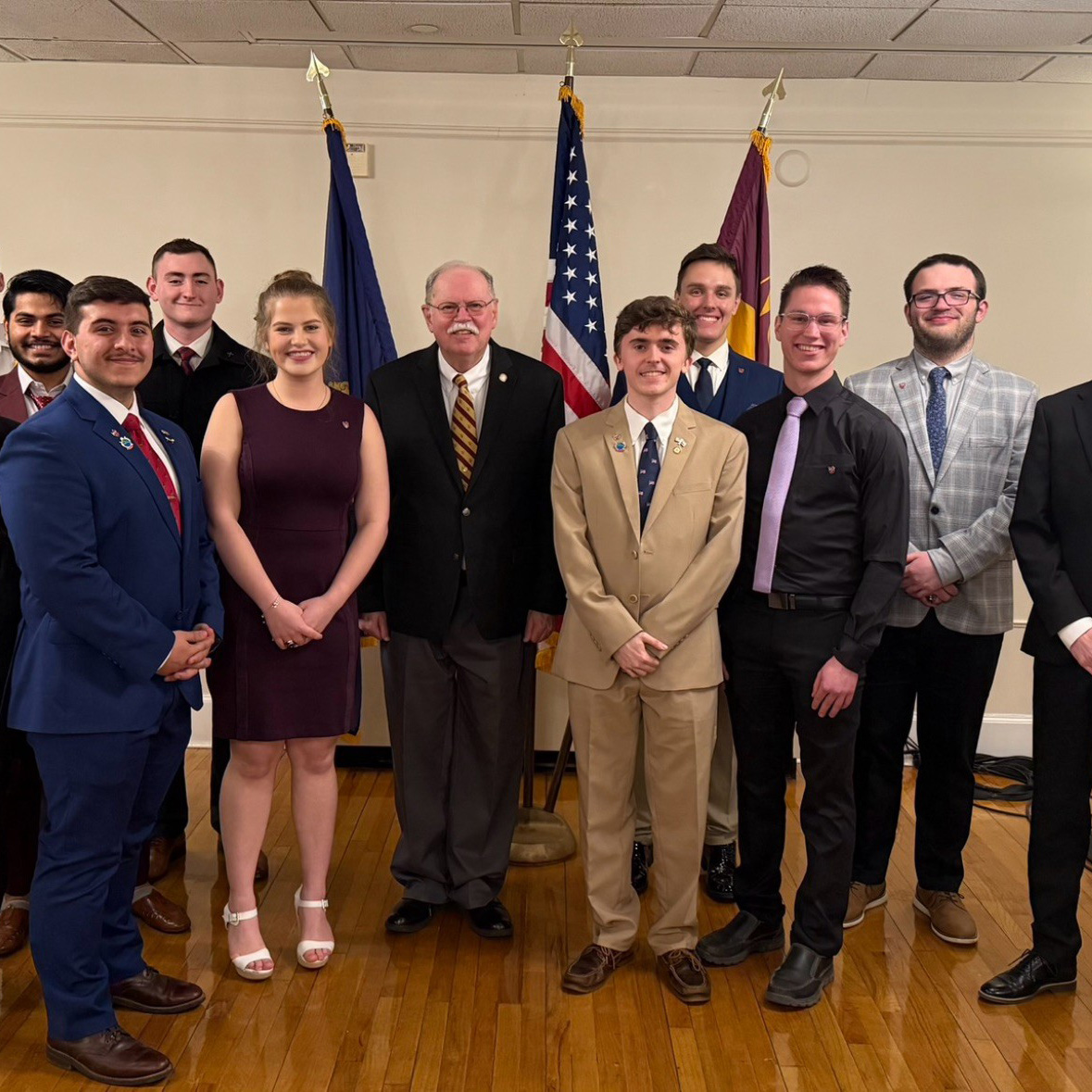
Serving the Students
By Hector Aponte '26
The president of the Student Government Association reflects on the role the organization plays in day-to-day campus life.
Read More 4 min read
NEW Podcast | The Norwich Effect: Real Students. Real Stories.
By NU Marketing & Communications Office
A new podcast shines a light on the students that make the Norwich community special.
Read More 2 min read
What is the academic experience like at Norwich?
The academic experience at Norwich combines disciplinary knowledge with opportunities to apply it.
What that looks like depends on the program. Engineering students may design and test solutions. Nursing students may learn through simulation and clinical education. Architecture students develop and present design work. Science students may conduct laboratory or field research. Students in the humanities and social sciences analyze evidence, construct arguments, and examine complex human questions.
Across disciplines, students should expect to read, write, discuss, calculate, build, test, revise, present, and collaborate.
The most useful question is therefore not simply, “Does Norwich offer my major?” It is, "What will I actually do as a student in that major?"
As a student, you will participate in and benefit from:
- required courses and progression through the major;
- laboratories, studios, simulations, or field experiences;
- research and internship opportunities;
- faculty interests and expertise;
- student organizations connected to the discipline;
- student projects;
- accreditation or professional requirements, when relevant.
Why this matters
A program title tells you what you can study. Projects, faculty relationships, learning environments, and student experiences show you how you will study it.
Explore Norwich undergraduate programs
What is undergraduate research like at Norwich?
Undergraduate research gives students an opportunity to move from learning established knowledge to investigating a question of their own.
At Norwich, research can take different forms across academic disciplines. A student might conduct laboratory or field research, analyze historical sources, investigate cybersecurity problems, evaluate public policy, contribute to faculty research, build and test a prototype, or present findings at a symposium.
In the 2025 First Destination Survey, 33 percent of respondents who reported curriculum-based experiential learning identified academic research as one of their experiences. Because respondents could select multiple experiences, this figure should be understood as part of a broader experiential-learning picture.
Research can help students learn to:
- define a focused question;
- evaluate sources and evidence;
- select an appropriate method;
- manage a long-term project;
- respond when results do not match expectations;
- explain findings to specialist and general audiences;
- work closely with faculty and student collaborators.
Why this matters
Research teaches more than subject knowledge. It teaches students how to approach uncertainty carefully, test ideas, revise assumptions, and communicate what the evidence supports.
Explore undergraduate research opportunities
What are the two undergraduate student experiences at Norwich?
One university. Two undergraduate students' experiences.
Residential undergraduates choose between the Corps of Cadets and the civilian student experience.
Both groups pursue Norwich academic programs and participate in the broader life of the university. The principal difference is the structure of life outside the classroom.
What is the Norwich Corps of Cadets experience?
The Corps of Cadets is a structured military lifestyle centered on discipline, leadership, teamwork, responsibility, and service.
First-year cadets begin as Rooks and progress through a developmental experience that asks them to learn standards, work as a team, manage competing responsibilities, and prepare for increasing leadership roles.
Joining the Corps does not itself create a federal military-service obligation, and selecting the Corps is separate from receiving an ROTC scholarship. Norwich also allows incoming students to change their selected lifestyle before enrollment.
What is the Norwich civilian student experience?
Civilian students live in civilian residence halls and participate in a college lifestyle that does not include the daily military structure of the Corps.
They pursue the same undergraduate academic programs and can take part in athletics, clubs, research, student government, service, campus employment, outdoor activities, and other university opportunities. Civilian does not mean uninvolved, and leadership development is not reserved for cadets.
Why this matters
Students should understand the everyday expectations of each lifestyle — not simply the labels — before selecting one. The right choice depends on the structure, responsibilities, goals, and community experience a student wants.
Explore the Corps of Cadets
Explore Student Life
Explore ROTC at Norwich
Do Norwich cadets and civilian students interact?
Yes. Cadet and civilian students share academic programs, classrooms, faculty, athletic teams, clubs, projects, campus resources, events, and many friendships.
Their residential routines and daily structures are different, and students may experience those differences in different ways. That distinction should be explained honestly rather than minimized. A cadet’s time may include military training, formations, inspections, and Corps responsibilities. A civilian student has a different residential structure and greater control over portions of the daily routine.
At the same time, the two experiences are part of one undergraduate university. Their interaction is often strongest where students share a clear purpose: completing a difficult course, preparing a presentation, competing on a team, conducting research, organizing an event, or solving a problem together.
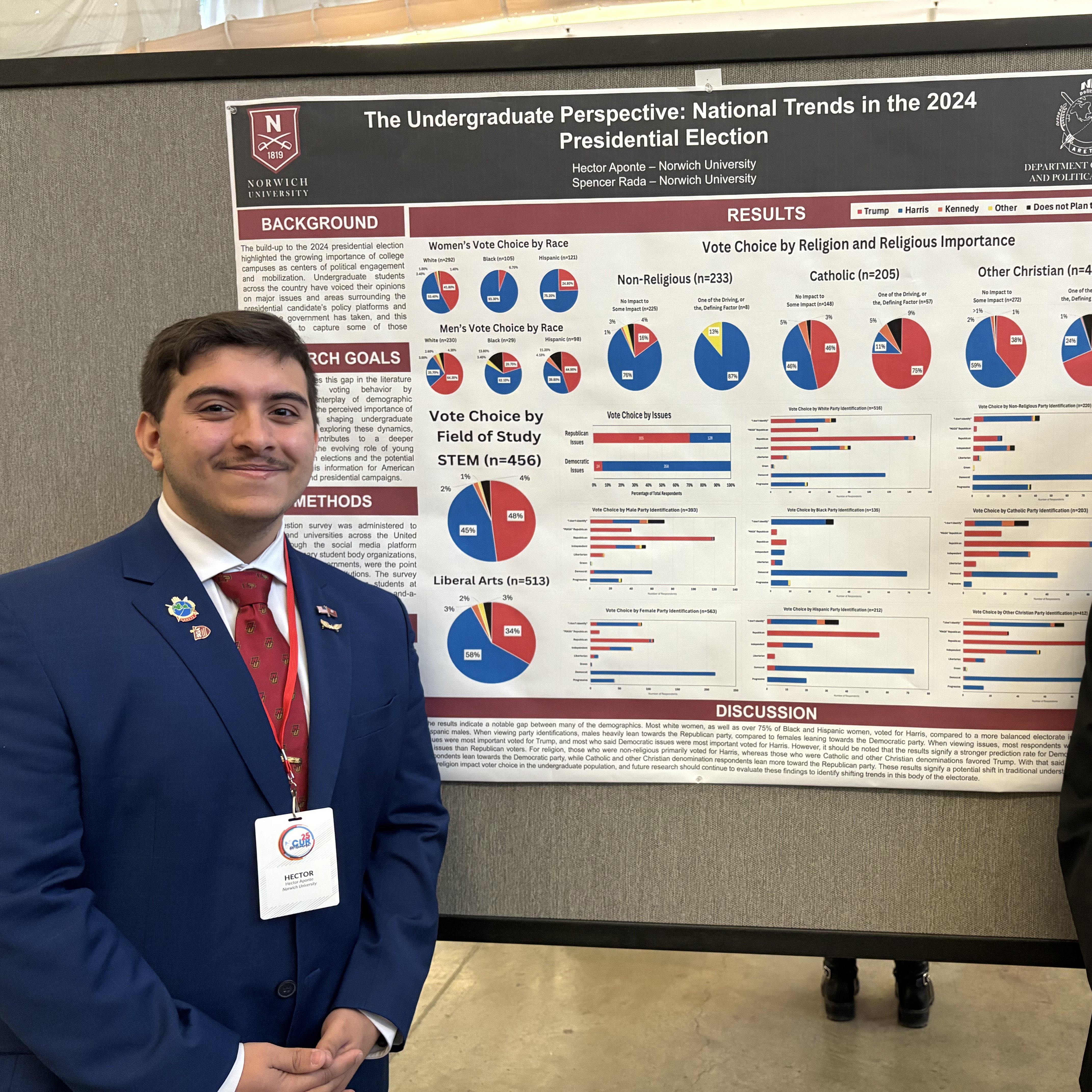
Hector Aponte ’26 arrived intending to study mechanical engineering and join the Corps. Before graduation, his path had changed: he became a political science student, transitioned away from the military lifestyle, conducted research, and served as student body president. His account illustrates that students can discover new directions while remaining active members of the Norwich community.
Why this matters
Prospective students are not only choosing a major. They are choosing a community. Understanding how the two undergraduate lifestyles differ — and where students come together — is essential to making an informed decision.
Hector Aponte ’26
Outgoing student body president reflects on his Norwich path
What does everyday student life feel like at Norwich?
Norwich is a residential university where academic work, activities, relationships, and daily responsibilities are closely connected.
The campus can feel energetic, structured, demanding, supportive, traditional, competitive, collaborative, or quiet depending on the student, the day, and the setting. A Rook preparing for Recognition, a civilian student leading a club, an athlete traveling to a competition, a nursing student completing clinical work, and a researcher preparing a presentation may describe Norwich very differently.
That is why no single testimonial can explain the entire undergraduate experience. A more trustworthy picture comes from hearing several students discuss:
- their academic workload;
- how they manage their time;
- where they find community;
- how cadets and civilians interact;
- what surprised them;
- what they find difficult;
- what support they use;
- what they do outside class;
- why they stayed;
- what they would tell a prospective student.
No single student can represent the Norwich experience. Every student's journey is different. The best way to understand Norwich is through the people who live it. Throughout this guide, you'll find stories from Reveille alongside ReelLife videos featuring cadets and civilian students sharing their experiences in their own words. Together, these perspectives reflect the many different paths students take through Norwich—across academics, athletics, leadership, service, and campus life.
Why this matters
Campus atmosphere is not a slogan. It is the cumulative result of schedules, expectations, relationships, traditions, challenges, spaces, and individual experiences.
What do Norwich students do outside the classroom and on weekends?
Student life at Norwich includes athletics, club sports, student organizations, outdoor recreation, residence-hall activities, campus events, service, performances, traditions, informal time with friends, and trips beyond campus.
The balance differs by student. Cadets, civilians, varsity athletes, student employees, and students in academically intensive periods may have very different schedules.
Northfield is a small Vermont town rather than a large urban entertainment district. Students looking for a city-centered college experience should consider that honestly. For others, the setting provides access to outdoor recreation, a close residential community, campus traditions, and relationships that develop because students spend substantial time together.
A direct answer to “Is Norwich a party school?” should not be built around a label. A better answer explains:
- the range of social activities available;
- the role of campus programming;
- the realities of a rural location;
- behavioral expectations;
- substance-free options;
- nearby transportation and recreation;
- ReelLife experiences from current students (above).
Why this matters
Students should understand how they are likely to spend an ordinary Friday evening, not only what happens during major admissions events.
What is it like to live and study in Northfield, Vermont?
Northfield is a small Vermont community surrounded by hills, rivers, forests, and nearby outdoor recreation.
For prospective students, the setting presents both advantages and tradeoffs.
Students may value:
- a campus-centered residential experience;
- access to hiking, skiing, snowboarding, and other outdoor activities;
- seasonal changes and a distinct Vermont setting;
- a smaller community where campus relationships play a major role in daily life;
- access to nearby communities and destinations when transportation is available.
Students should also consider:
- whether they prefer a rural or urban environment;
- how often they expect to leave campus;
- whether they will have access to a car;
- available university or local transportation;
- the number and variety of nearby restaurants, shops, and entertainment options;
- winter weather and travel.
The most credible version of this section will eventually combine official transportation and community information with several current students’ accounts of how they navigate Northfield and central Vermont.
Why this matters
Location affects daily life. Students should evaluate Northfield as carefully as they evaluate the academic program, residence hall, or financial-aid package.
Explore Northfield and the surrounding area
Plan a Norwich campus visit
How can I decide whether Norwich is right for me?
The best way to evaluate Norwich is to compare what matters to you with what students actually experience.
As you explore, consider asking:
- Can I picture myself in the Corps of Cadets or civilian experience?
- Does Norwich offer the academic program and learning environment I need?
- What practical experiences are available in my intended field?
- How will I explore careers and prepare for life after graduation?
- What does an ordinary week look like for a student like me?
- How do students find friends and community?
- What will living in Northfield be like for me?
- What support will I use when college becomes difficult?
- What will Norwich expect from me?
- What questions remain unanswered?
Visit campus when you can, and be sure to check out our Camps & Hands-on Learning Experiences, they are a great way to get a feel for the campus and the Cadet lifestyle. Sit in on an academic experience if one is available. Speak, with current students from both undergraduate lifestyles. Meet faculty in your intended program. Ask about costs, financial aid, internships, research, housing, dining, student support, and career outcomes.
A university should be willing to help you investigate—not simply persuade you.
Still deciding?
Choosing a university is a significant decision, and the right choice is different for every student.
Norwich offers a distinctive undergraduate experience, but distinctive does not mean right for everyone. We encourage you to examine the opportunities, expectations, community, setting, and costs carefully. Ask difficult questions. Look for evidence. Talk with people whose experiences resemble the one you may pursue — and with people whose experiences differ from it.
Whether you ultimately choose Norwich or another university, an informed decision begins with understanding what each institution genuinely offers.
Continue Exploring Norwich
These resources can help answer the questions that often come next:
- Explore undergraduate academic programs
- Explore Your Options: Corps or Civilian
- Learn About the Corps of Cadets
- Learn about ROTC
- Explore undergraduate research
- Review undergraduate career outcomes
- Learn about student life
- Review tuition, financial aid, and scholarships
- Plan a campus visit
- Connect with Undergraduate Admissions
Ready to take the next step?
Once you have explored the undergraduate experience, use the established Next Steps: The Admissions Process to move from evaluation to action.
Next Steps: The Admissions Process
-
Here To Help
We're here to help you along the way.
We are thrilled that you are considering Norwich and have a team dedicated to help you through every step. College is challenging and fun, applying should be as simple as possible. Reach out to your admissions counselor whenever you have questions or need help!
-
Apply Now
Complete an application online using either the Norwich app or the Common app.
-
Visit Campus
From seasonal open houses to leadership training weekends and summer camps, Norwich offers personalized events for you to get the full Norwich experience.
- Learn about our academic programs from renowned faculty
- Discover admissions and financial aid options
- Enjoy a complimentary brunch in the dining hall
- Discuss athletics opportunities with Norwich coaches
- Tour the campus and talk with current students about life at Norwich University
Schedule a campus visit to meet students and see Norwich in action.
You've been accepted to Norwich University. Congratulations, you are on your way to being part of an exclusive tradition and forging your own path within our noble history of service.
-
Scholarships
Upon acceptance, you’ll receive a comprehensive letter that includes the merit-based scholarships you qualify for based on your GPA.
-
Federal Student Aid App
To be considered for additional aid, you must complete the FAFSA (Free Application for Federal Student Aid). By completing the free application you'll learn if you are eligible for grants, scholarships, work-study programs, or loans for college or career school.
Note: FAFSA will open on or before December 1st, 2024 per the U.S. Department of Education.
-
Review Your Financial Aid Package
We’re here to help you every step of the way. Your admissions counselor is just a phone call, email, or text away. Schedule a personal consultation to review your complete financial aid package together. Contact your admissions counselor at any time throughout the process.
-
Secure Your Spot
Ready to exceed expectations and defy limits? Secure your spot at Norwich with a non-refundable enrollment deposit.
-
Stress-free Arrival
Once you're accepted, you'll begin Norwich's unique Start Ready process to help you complete intake paperwork and prepare you for a stress-free campus arrival.
Check out the Start Ready Checklist for details.