Army Reserve Officers’ Training Corps (AROTC)

Norwich University Army ROTC trains, mentors, and develops cadets as leaders of character as they prepare to commission into the U.S. Army, U.S. Army Reserve, and U.S. Army National Guard.

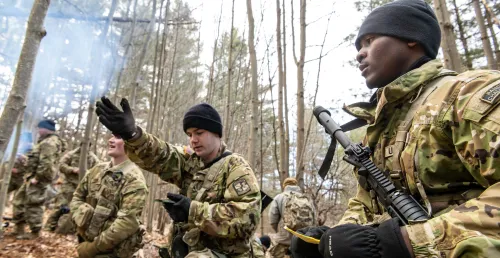
Three people in camouflage uniforms and black knit caps hold rifles in a wooded area.

Build the military knowledge, training, and experience that prepare you for service after graduation.

Why Army ROTC at Norwich?

At Norwich, Army ROTC is part of a broader four-year military leadership environment. You develop through Army ROTC while also taking on increasing responsibility within the Corps of Cadets, giving you repeated opportunities to practice leadership beyond the classroom or weekly ROTC training.

You learn to lead peers, rely on others, be accountable to your team, support others through shared challenges, make decisions, and become responsible for people rather than simply being in charge of them. 

“Together, the Corps of Cadets and Army ROTC have allowed me to meet hundreds of other cadets whose leadership styles and personalities have shaped mine and the way I conduct myself every day.”

Corey Martin ’27
Regimental Commander, Corps of Cadets


Key Information:


The Army ROTC experience

The Norwich Army ROTC Pioneer Battalion trains cadets to be Army officers through a progressive program that places them in positions of increasing responsibility and authority.

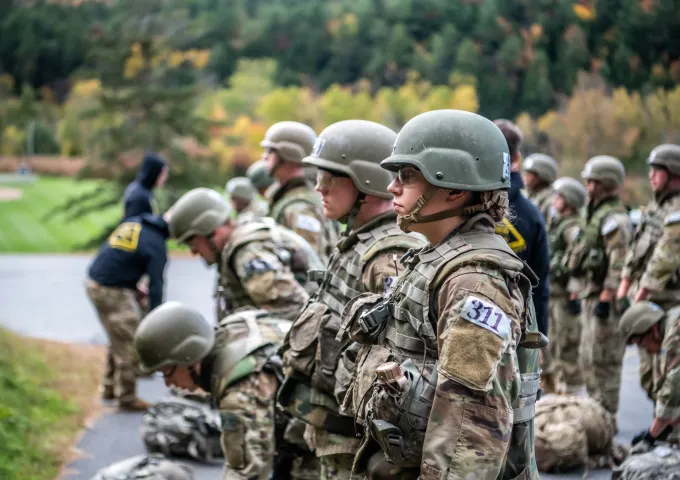
Cadets in camouflage uniforms and helmets gather along a road with packs and training gear.

Training, instruction, and leadership lab

Cadets participate in morning physical training, classroom instruction, and a weekly two-hour leadership lab. As they progress, they are expected not only to build physical readiness but also to lead peers, make decisions, support their team through challenge, and take greater ownership of training and outcomes.

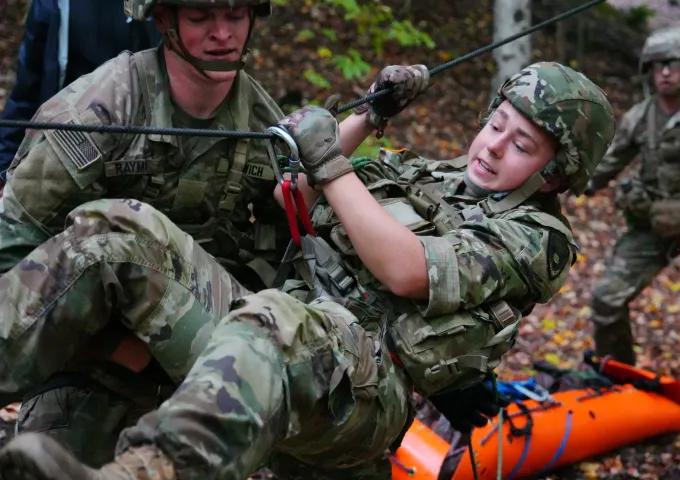
Two service members in camouflage uniforms work together on a rope crossing during outdoor training.

Field Training Exercise (FTX)

Each semester, Army ROTC cadets take part in a Field Training Exercise, or FTX. It gives cadets the opportunity to take what they have practiced in class and leadership lab and apply it in a field environment, working together, solving problems, making decisions, and taking on leadership roles as the training becomes more complex.

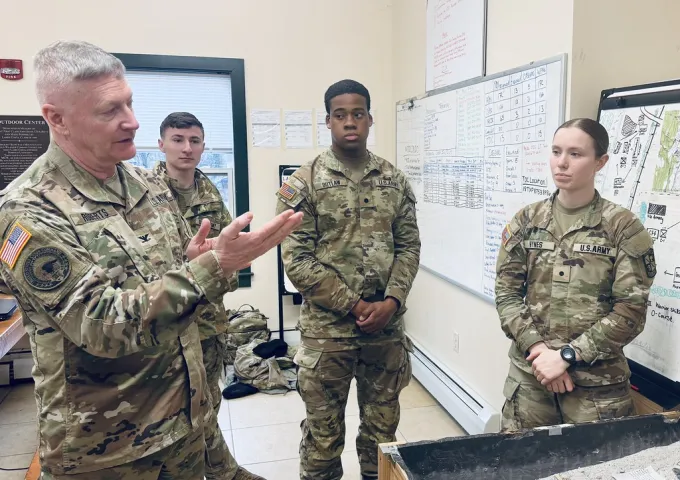
Service member gestures while speaking to three others in Army uniforms beside a terrain model and whiteboards.

Army professional mentorship

The Army ROTC cadre at Norwich University includes experienced officers, noncommissioned officers (NCOs), contractors, and civilians dedicated to the success of every Norwich cadet. They bring experience from across Army branches, including command, leadership, and staff roles. You are mentored by Army professionals who bring that experience into your training and can challenge, coach, and guide you as your responsibilities grow.

Your path to commission


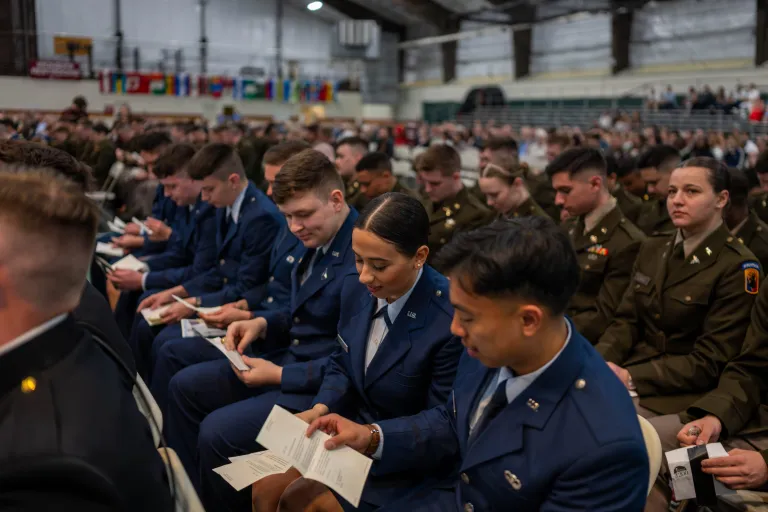
Service members in blue and green dress uniforms sit in rows and read programs during an indoor ceremony.

Years 1-2

ROTC Basic Course covers your first two years, and builds your foundation of Army leadership and military training.

Through classroom instruction, PT, Military Leadership Lab (Mil Lab), and field training, you build skills in critical thinking, troop-leading procedures, and small-unit tactics.

Year 2

Contracting marks the point when a cadet formally commits to Army service and begins receiving applicable financial benefits.

Cadets who are not on an Army ROTC scholarship may contract beginning in their sophomore year, as expectations increase in Mil Lab, field training, and leadership roles.

Year 3

ROTC Advanced Course builds on the first two years with greater responsibility for planning, leading, teaching, and developing other cadets.

Training includes squad and platoon operations, problem solving, and staff responsibilities, along with Cadet Advanced Camp between junior and senior year.


A distinct path to active duty

As one of the nation’s six Senior Military Colleges, Norwich has a distinct path for Army ROTC graduates seeking active duty.

Federal law provides that graduates who want to serve as commissioned Army officers on active duty, are medically and physically qualified, and receive the required recommendation from the Professor of Military Science, shall be assigned to active duty.

Careers and pathways

Army officers serve across a wide range of career fields, from operations and logistics to intelligence, communications, engineering, cyber, aviation, and other specialized areas.

At Norwich, you can begin connecting what you study, how you train, and where your strengths could take you as an Army officer.

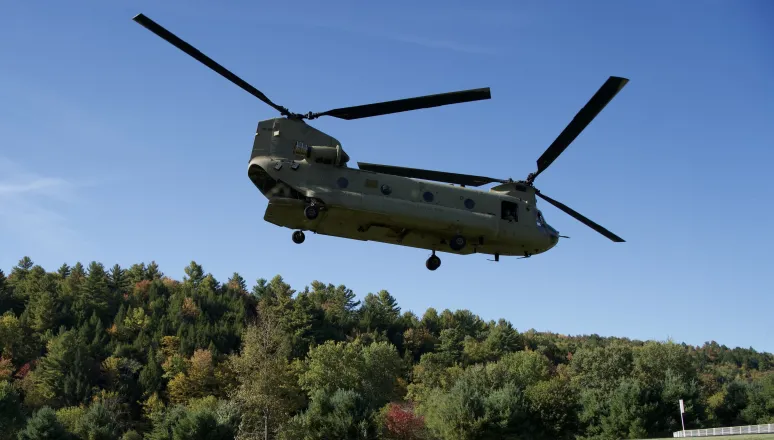
A U.S. Army Chinook helicopter flies low over a grassy field during the Patriot Games at Norwich University, with wooded hills in the background.

Army aviation pathway

Interested in becoming an Army aviator? At Norwich, you can combine Army ROTC and Corps leadership experience with Army training opportunities as you prepare to compete for selection into the Army Aviation branch.

Matthew Ober ’26 combined that path with Ranger Challenge and Air Assault qualification as he prepared to pursue Army Aviation.

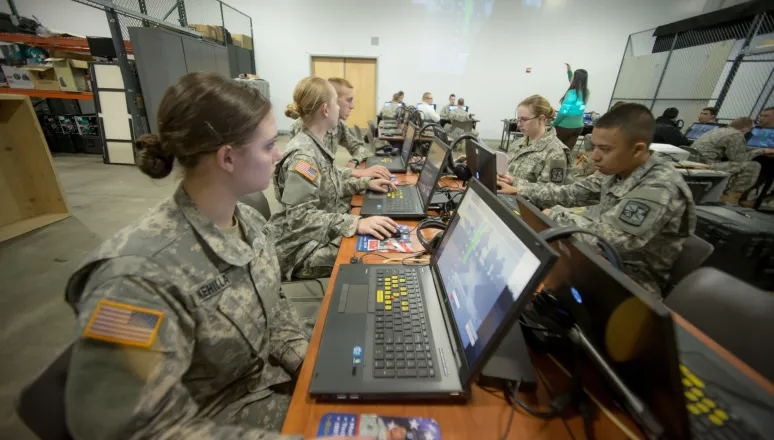
Norwich University cadets in Army uniforms work at laptop computers during a tactical simulation exercise at the Norwich University Applied Research Institutes (NUARI).

Army cyber & technical pathways

Your academic interests can connect directly to your Army career. At Norwich, students can pair technical study in areas such as cyber, engineering, intelligence, and communications with Army ROTC leadership development.

Army ROTC cadets who complete Norwich’s Cyber Leader Development Program and commission into the Army receive a cyber designation on their Army record, which can give them preference for many Army Cyber openings.

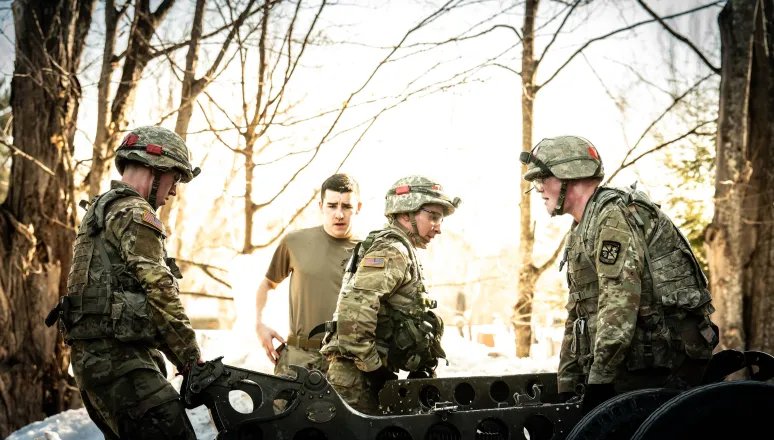
Three cadets in camouflage uniforms and helmets gather around military equipment with another person in a snowy wooded area.

Army combat arms pathways

Lead Soldiers in Infantry, command tank and cavalry formations in Armor, coordinate Field Artillery, or serve in the Corps of Engineers, where missions can range from breaching obstacles and building bridges to construction, mobility, and infrastructure.

You learn to assess the situation, rely on your team and make tactical decisions that shape how Soldiers maneuver and fight on the ground.

Student Voices

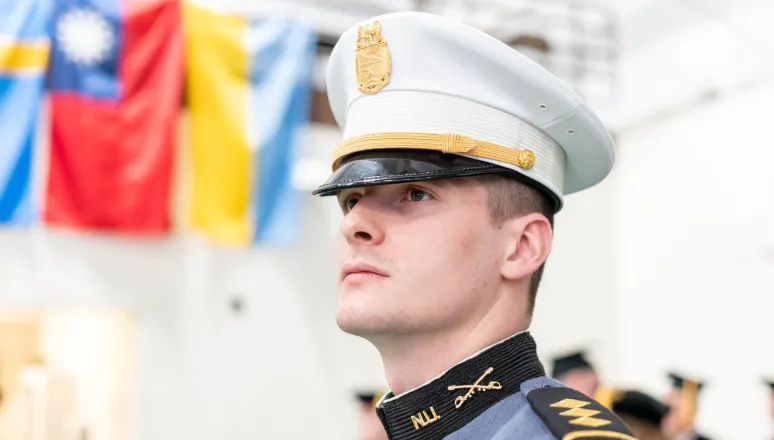
Norwich cadet in a blue dress uniform and white peaked cap stands indoors with colorful flags in the background.

Matthew S. Ober ’26

“I was intrigued by the opportunity to become both a leader and a pilot, skills that, in my opinion, help support fellow Soldiers.”

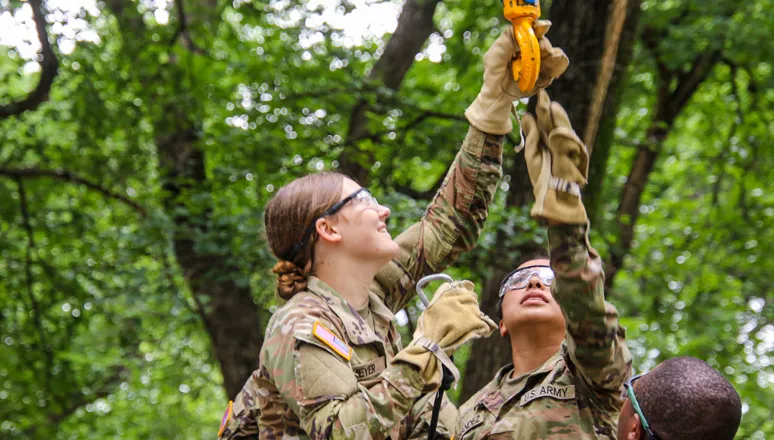
Two service members in camouflage uniforms and safety glasses reach up to secure a yellow hook during outdoor training.

Rori Meyer

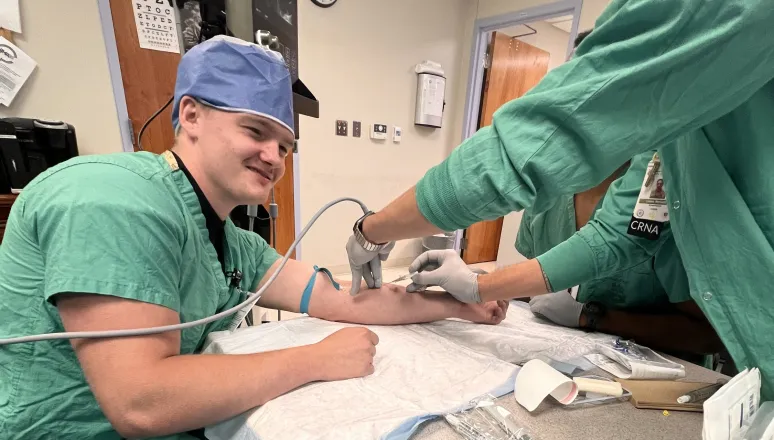
“I feel like I am at an advantage among my peers by being a nursing cadet, as I get more leadership experience than the average student and understand how important working together is.”

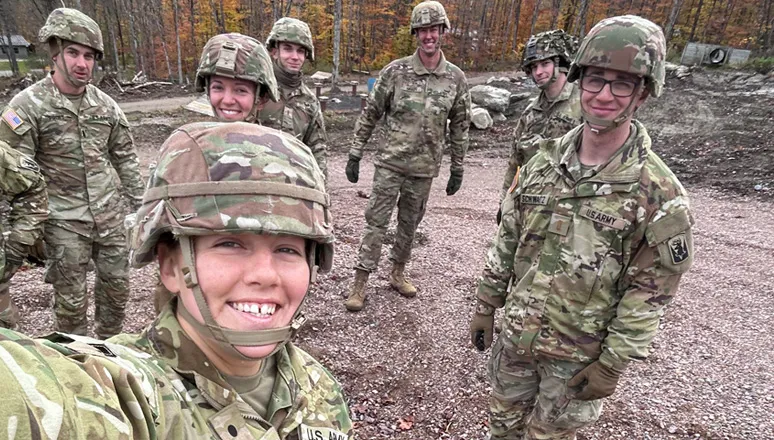
Seven service members in camouflage uniforms and helmets pose together outdoors with autumn trees in the background.

Madeline Ortiz ’27

"Army ROTC gives you experience of what it is like to think critically. You get hands-on experience briefing complex operations, teaching military tactics to the lowest levels, and learning the importance of making quick, decisive decisions during scenario-based operations."

How do I choose an Army career field?

Branch selection happens later in the ROTC experience and considers factors including your preferences, qualifications, performance, and the needs of the Army.

Can I pursue the major I want?

You can combine Army ROTC with a wide range of Norwich majors, building an academic path that supports both your Army goals and the work you may pursue beyond military service.

With a variety of technical majors and our Department of Defense Cyber Institute, Norwich offers academic opportunities that can complement your military and career interests.

View all frequently asked questions about AROTC

What is the difference between the Corps of Cadets and Army ROTC?

  • The Corps of Cadets is Norwich’s four-year military-style leadership experience. 
  • Army ROTC is the program that prepares cadets to commission as Army officers. 

You can be in the Corps without committing to military service. If you choose Army ROTC and later contract, you are preparing for an Army commission while also developing through the broader Corps experience.

Do I have to commit to the Army as soon as I join ROTC?

No. Students who enroll in Army ROTC have no obligation to the U.S. Army until they contract. Enrolling in the ROTC Basic Course during the first two years of college does not create a service obligation unless the student has received an Army ROTC scholarship. Accepting an Army ROTC scholarship carries a service obligation.

What makes Army ROTC at Norwich different from ROTC at a traditional university?

Norwich is the nation’s first and only private Senior Military College. Army ROTC is part of a broader four-year military leadership environment rather than a program you step into only for classes, labs, or training. You live and learn within the Corps of Cadets, where leadership, shared standards, accountability, and responsibility for others are part of everyday life. You make decisions, learn from the results, rely on your peers, and take on greater responsibility over time. That gives you repeated opportunities to practice leadership before you commission, while still pursuing your major, athletics, clubs, research, study abroad, and the rest of the university experience.

What does a typical week in Army ROTC look like?

Army ROTC combines classroom instruction, physical training, and a weekly leadership lab. Cadets take part in physical training three mornings each week and a two-hour leadership lab, with training and responsibility increasing as they progress through the program. Army ROTC also includes a field training exercise each semester.

Can I choose any major?

Yes. Army ROTC cadets may major in nearly all academic areas at Norwich. You can pursue the major that fits your interests and goals while completing Army ROTC alongside your degree. Some Army career fields have additional academic considerations. Nursing and cybersecurity, for example, have specific requirements or recommendations explained in more detail on the Careers and pathways page.

Do I need previous military experience to join Army ROTC?

No. You do not need previous military experience or prior Army knowledge to begin Army ROTC at Norwich. The program is designed to build your knowledge, skills, confidence, and responsibility progressively over four years.

Do I need an Army ROTC scholarship to participate?

No. Army ROTC enrollment is not limited to scholarship recipients. Students may participate in Army ROTC whether or not they receive a scholarship. Students who begin without a scholarship may also have opportunities to compete for scholarships while enrolled at Norwich.


Explore Army careers and pathways.

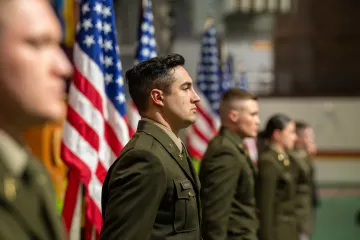
Uniformed cadets stand in a line with American flags in the background.

Army ROTC scholarships

Army ROTC offers several scholarship paths for students entering college and for cadets who are already enrolled. Scholarships may cover tuition and fees or provide support for room and board, along with book and monthly living allowances.

If you begin Army ROTC without a scholarship, you may have opportunities to compete for a scholarship after enrolling. Contracted cadets may also be eligible for a monthly Army ROTC living allowance even if they do not hold a scholarship.